Buying vs. Renting Your Website: Demystifying SaaS Lock-in and Legacy Source Code Traps
Enterprise Web Architecture & SEO Lab
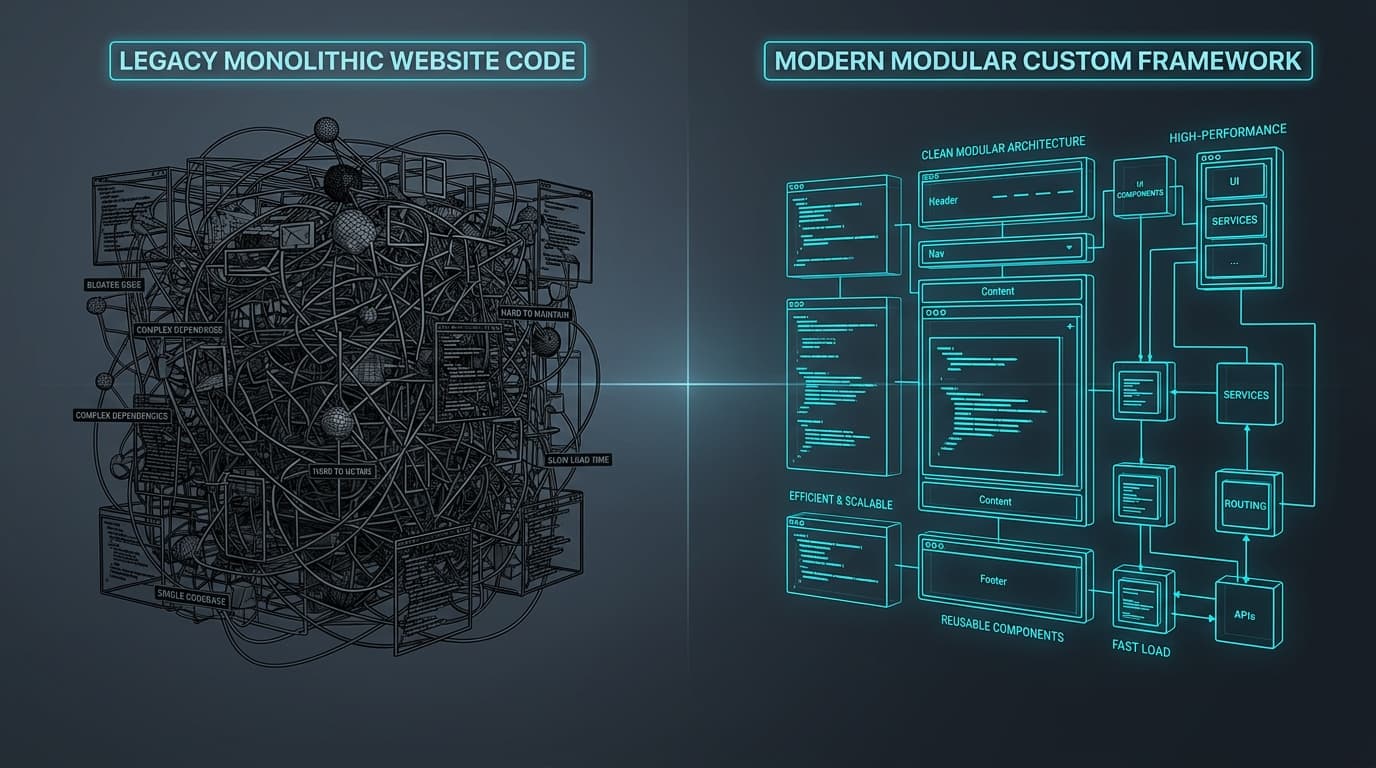
Enterprise decision-makers often face two extremes: getting trapped in proprietary SaaS platforms with zero migration rights, or receiving unmaintainable legacy PHP template dumps. This guide breaks down digital asset ownership, true source code standards, and the strategic value of zero vendor lock-in.
01.The SaaS Subscription Trap: Why Lack of Source Code Ownership Is Renting Your Brand's Foundation
In the enterprise web development market, proprietary SaaS website builders promising quick drag-and-drop launches are pervasive. While seemingly economical for early startups, the fundamental business model is 'software rental' rather than 'asset ownership'. Companies pay recurring annual subscription fees while underlying source code, database architectures, and infrastructure configurations remain strictly controlled by the vendor.
As enterprise operations scale, the hidden liabilities of SaaS models compound exponentially. The most severe issue is zero migration capability: when an enterprise needs custom workflow integrations, proprietary CRM hooks, or seeks to change vendors due to substandard service or steep price hikes, the website cannot be migrated. If annual renewals lapse, the site is immediately terminated, wiping out years of accumulated Google search equity, backlink authority, and buyer traffic.
Furthermore, SaaS multi-tenant architectures host thousands of websites on shared IP pools. If a neighboring tenant incurs search engine penalties or malicious flags, your legitimate corporate site suffers collateral ranking drops and enterprise firewall blocks across international markets.
02.Beware of Fake 'Source Code Delivery': Are You Receiving an Engineering Asset or Legacy Debt?
Many executives who have experienced SaaS vendor lock-in explicitly demand full source code delivery when commissioning a custom rebuild. However, the traditional agency sector frequently delivers 'pseudo-source code'—dumping unmaintainable, decades-old codebases that introduce catastrophic technical debt:
Key impact summary:
- Monolithic legacy template dumps: Many agencies simply zip up outdated PHP/WordPress monolithic templates bundled with dozens of unmaintained plugins, resulting in hundreds of thousands of lines of spaghetti code riddled with unpatched vulnerabilities.
- Absence of modern engineering standards: Missing Git commit histories, absence of TypeScript type definitions, and lack of automated CI/CD deployment pipelines make the codebase impossible for external engineering teams to audit or maintain.
- Critical security vulnerabilities and backdoor exploits: Relying on obsolete server-side scripting exposed to the public internet creates severe attack vectors for SQL injection, cross-site scripting (XSS), and malicious script injection that undermine enterprise trust.
- Inability to deploy flexibly across modern clouds: Monolithic codebases tightly coupled to legacy web servers cannot deploy to global Edge CDNs or containerized cloud infrastructure, requiring costly full rebuilds for minor feature additions.
Genuine source code delivery is not a raw server file dump; it represents clean, structured, and modular software engineering assets built to modern web standards.
03.The Enterprise Digital Sovereignty Manifesto: True Source Code Ownership and Zero Vendor Lock-in
In modern enterprise digital strategy, the corporate website is the central hub of global brand equity and customer acquisition. Adopting Next.js, React, and TypeScript decoupled architectures alongside full, clean source code delivery establishes decisive strategic independence:
For enterprises committed to compounding brand authority and global growth, investing in clean source code delivery and infrastructure freedom secures an appreciating, resilient digital asset for years to come.
By maintaining complete ownership of source code and infrastructure, organizations ensure long-term agility and transform their corporate website into a defensible digital asset.
Related Technical Insights
B2B Website Content Architecture: How Brand Operators Build High-Converting Product & Solution Portals
Engineering Trust in B2B Deals: How Brand Marketers Build High-Impact Customer Case Studies
Maximizing Inbound Conversion: How B2B Marketers Optimize Lead Capture Funnels on Corporate Websites
How to Choose a Domain for Multilingual Websites: Subdirectory, Subdomain vs. New Domain
Corporate Website Pricing: Why Quotes Range from $500 to $10,000 and How to Budget
Why Your B2B Website Gets No Inquiries: Core Google Indexing and Ranking Mechanisms
Why Enterprises Should Avoid Template Websites: Core Differences Between Custom and Template Development
Template Website UX Issues: Core Web Vitals Bottlenecks, Mobile Adaptation, and Brand Trust Crises
2026 Corporate Website Architecture Guide: Next.js + Headless CMS in Practice
Need a structured plan for your corporate website?
Share your business goals, target markets, and current materials. We will first clarify scope, implementation path, and delivery boundaries.
Book a consultation