How to Choose a Domain for Multilingual Websites: Subdirectory, Subdomain vs. New Domain
Enterprise Web Architecture & SEO Lab
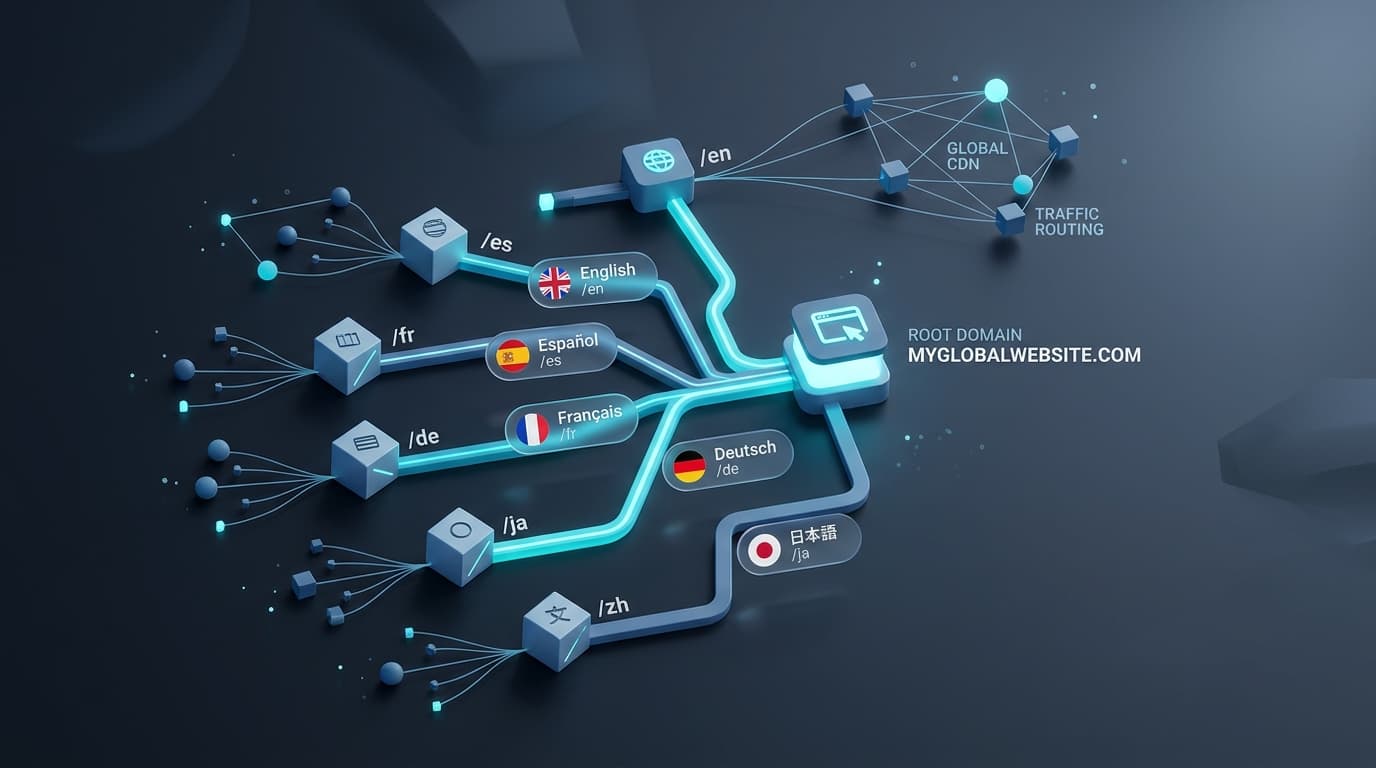
When expanding a corporate website into English or multiple languages, should you use a subdirectory (/en), a subdomain (en.), or purchase a separate domain? This non-technical guide compares SEO equity inheritance, operational costs, and practical decision rules.
01.Three Multilingual Domain Approaches and Their Core Logic
When initiating a multilingual website or revamping an existing corporate portal with an English edition, the very first critical architectural question is 'how to structure domain URLs'. Three primary paths exist: primary subdirectories (e.g. aioo.cc/en), subdomains (e.g. en.aioo.cc), and completely separate new domains (e.g. aioo-global.com).
Non-technical executives often underestimate the profound impact of URL structures on Google rankings. Google's algorithm treats these approaches with sharp differences in authority consolidation, crawl budget efficiency, and SSL certificate maintenance costs. Making the wrong choice can trap your international site in a months-long zero-indexing cold start.
Across established global enterprises, unless domestic and international markets operate under completely distinct trademarks, utilizing primary subdirectories (/en) stands as the most cost-effective and SEO-resilient choice.
02.Evaluating SEO Equity Inheritance, Server Overhead, and Branding
To help leadership make an informed decision, we evaluate the three models across search authority, operational overhead, and commercial trust:
Key impact summary:
- Primary Subdirectory (/en pattern): Strongest SEO advantage. Localized pages directly inherit existing domain age, backlinks, and domain authority, while requiring only a single SSL certificate and DNS zone.
- Subdomain (en. pattern): Google indexes subdomains as semi-independent properties. Authority sharing is less immediate, but it suits setups where language systems run on isolated servers.
- Separate Brand Domain: New domains start in Google's sandbox with zero authority, requiring 3 to 6 months of link building before meaningful search impressions occur.
- Hreflang & Sitemap Orchestration: Irrespective of domain architecture, bidirectional hreflang tags and dynamic localized sitemaps must be engineered into HTML to prevent duplicate content penalties.
For the vast majority of B2B manufacturers and export businesses, maintaining a single unified root domain protects physical collateral branding while allowing the English version to ride the accumulated authority of the primary domain.
03.Practical Decision Tree and Implementation Roadmap
During project scoping, apply this straightforward rule: If your primary brand name is universal and targets both domestic and global audiences, default to subdirectories (/en); if the international venture uses a newly registered global entity, register a dedicated ccTLD or global domain.
At the technical implementation level, deploy a modern SSR framework like Next.js to guarantee compliant x-default fallbacks and sub-second global edge CDN acceleration.
Domain architecture represents the foundational bedrock of global expansion. Establishing a compliant URL infrastructure from day one prevents costly migrations and accelerates organic search ROI.
Related Technical Insights
B2B Website Content Architecture: How Brand Operators Build High-Converting Product & Solution Portals
Engineering Trust in B2B Deals: How Brand Marketers Build High-Impact Customer Case Studies
Maximizing Inbound Conversion: How B2B Marketers Optimize Lead Capture Funnels on Corporate Websites
Corporate Website Pricing: Why Quotes Range from $500 to $10,000 and How to Budget
Why Your B2B Website Gets No Inquiries: Core Google Indexing and Ranking Mechanisms
Why Enterprises Should Avoid Template Websites: Core Differences Between Custom and Template Development
Template Website UX Issues: Core Web Vitals Bottlenecks, Mobile Adaptation, and Brand Trust Crises
2026 Corporate Website Architecture Guide: Next.js + Headless CMS in Practice
Need a structured plan for your corporate website?
Share your business goals, target markets, and current materials. We will first clarify scope, implementation path, and delivery boundaries.
Book a consultation